


Contents
Children Remember How Salah Makes Them Feel
Help Children See Salah as a Conversation with Allah
Let Children Experience Salah Together
Celebrate Effort More Than Perfection
Talk About Allah’s Love, Not Only Rules
Be Patient With the Process
Free Salah Reflection Journal
Frequently Asked Questions
Many Muslim children begin learning Salah from a young age.
They learn the movements. They memorise short surahs. They begin to recognise when to stand, bow, and prostrate.
These are beautiful milestones, and they matter.
But for many parents and teachers, there is a deeper hope beneath all of that.
We do not only want children who know how to pray.
If you’re wondering how to help children love Salah, it starts with looking beyond the actions of prayer and focusing on the connection children build with Allah through it.
We want them to see prayer as more than a daily routine. We want them to feel at peace in it. We want them to turn to Allah naturally, speak to Him through dua, and find comfort in remembering Him.
That kind of love does not appear overnight. Like a seed, it grows slowly through small, repeated moments over time.
Children Remember How Salah Makes Them Feel
One of the most important parts of learning how to help children love Salah is understanding that children remember feelings more than instructions.
Think about your own childhood for a moment.
You may not remember every lesson you were taught, but you probably remember how certain moments made you feel.
Children are often the same.
If Salah is usually linked with rushing, pressure, frustration, or correction, a child may begin to see it as something heavy. Something to get through.
But if Salah is connected to warmth, encouragement, and calm family moments, children are more likely to develop positive feelings towards it.
This does not mean every prayer time will be peaceful or picture-perfect. Some days will feel messy. Children will get distracted. They will forget things. They will lose focus.
That is part of learning.
What matters most is the overall feeling that begins to build around prayer.
Help Children See Salah as a Conversation with Allah
Another way to help children love Salah is to help them understand its purpose.
Young children can sometimes see Salah as a set of actions to complete.
Stand. Bow. Prostrate. Sit. Repeat.
Learning the actions is important, but children also need help understanding what Salah truly is.
Salah is a gift from Allah. It is a time to remember Him, thank Him, and ask Him for help.
Simple conversations can begin opening that door.
You might ask:
- What would you like to ask Allah for today?
- What are you grateful to Allah for?
- What blessing did Allah give you today?
Questions like these gently help children connect their hearts to their worship, not just their bodies.
Let Children Experience Salah Together
Many of us remember standing beside our parents during prayer, copying their movements long before we fully understood them.
Those moments matter more than we sometimes realise.
Praying together helps children see Salah as a natural part of everyday life rather than something separate from it.
Children often learn more from what they observe than from what they are told.
When they regularly see parents pause their day to pray, they learn that Salah matters.
When they see parents making dua sincerely, they learn that Allah is someone they can turn to.
When they feel included in those moments, prayer becomes something lived, not just taught.
Celebrate Effort More Than Perfection
It is easy to focus on what a child got wrong.
A missed step. A forgotten word. A lapse in concentration.
But children respond deeply to encouragement.
A child who is trying needs to feel that their effort is seen.
Sometimes a simple sentence can stay with them:
- I loved how focused you were today.
- I noticed you remembered your prayer without being reminded.
- You tried really hard today, and that matters.
When effort is noticed, children feel capable. And when they feel capable, they are more likely to keep trying.
Talk About Allah’s Love, Not Only Rules
Many children grow up hearing about rewards and punishments. Those conversations have their place.
But children also need to hear about Allah’s mercy, kindness, and love.
They need to know that Allah loves those who remember Him. That He hears every sincere dua. That He sees their effort, even when they are still learning.
When a child develops a loving and hopeful understanding of Allah, their relationship with Salah often becomes stronger and more sincere.
Love is a powerful motivator. Far more powerful than fear alone.
Be Patient With the Process
Perhaps the most important reminder is this:
Love for Salah is usually built slowly.
Some children seem naturally drawn to prayer. Others need more time, more support, and more gentle encouragement.
There may be seasons when a child is enthusiastic, and other seasons when they seem uninterested.
That is normal.
Keep planting the seeds.
Keep praying with them.
Keep speaking positively about Salah.
Keep making dua for their hearts.
Keep showing them, in word and action, that prayer is a gift.
With Allah’s permission, those small moments will add up.
Years from now, your child may not remember every reminder you gave or every lesson you taught. But they may remember standing beside you in prayer. They may remember feeling close to Allah. And they may carry that love for Salah with them for the rest of their life.
Free Salah Reflection Journal
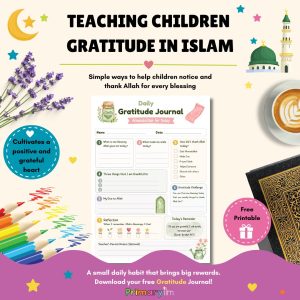
To help children build a deeper connection with prayer, we created a free Salah Reflection Journal.
Children can use it after Salah to think about what they are grateful for, what they want to ask Allah for, and how they feel after prayer.
It is a simple but meaningful way to encourage reflection and help children see Salah as more than a routine.

Frequently Asked Questions
Why Is It Important for Children to Love Salah?
When children love Salah, they are more likely to continue praying as they grow older. While learning the movements and words of prayer is important, developing a positive emotional connection with Salah can help children see it as a source of comfort, gratitude and closeness to Allah rather than simply a daily obligation.
At What Age Should Children Start Learning Salah?
Children can begin learning about Salah from a very young age by watching family members pray, joining in with simple movements and hearing conversations about Allah. As they grow older, they can gradually learn the words and actions of prayer. The key is to make learning age-appropriate and positive rather than overwhelming.
Islamically, children should be encouraged to start praying from the age of 7 so that they can develop the habit of Salah early. By the age of 10, they should be praying regularly and becoming consistent with their daily prayers. Building this routine gradually with patience, encouragement and positive reinforcement can help make Salah a natural part of their everyday lives.
What If My Child Doesn’t Want to Pray?
Many children go through stages where they seem uninterested in Salah. This is normal and does not necessarily mean they will always feel this way. Try to remain patient, continue leading by example and focus on building a positive relationship with prayer. Gentle encouragement, family prayer times and discussions about Allah’s blessings can often be more effective than repeated reminders alone.
How Can I Make Salah More Meaningful for My Child?
Helping children understand why they pray can make Salah more meaningful. Encourage them to make personal duas, talk about Allah’s blessings and explain that Salah is a way of remembering and connecting with Allah. Activities such as reflection journals, gratitude prompts and family discussions can also help children engage more deeply with prayer.
Can Rewards Help Encourage Children to Pray?
Rewards can sometimes help motivate children when they are first developing a habit, but they work best when combined with encouragement, positive experiences and a deeper understanding of Salah. Over time, the goal is for children to pray because they love pleasing Allah and value their relationship with Him, rather than simply seeking a reward.
How Do I Help My Child Stay Consistent With Salah?
Consistency often comes from routine and example. Praying together as a family, setting aside dedicated prayer times and creating a calm environment for worship can all help. Remember that consistency develops gradually, and small steps taken regularly are often more effective than expecting perfection straight away.
Explore More Salah Resources
If you are looking for more ways to support children with Salah, Primary Ilm offers a wide range of printable activities, flashcards, journals, presentations, and teaching resources for use at home, school, and madrassah.
You can create a free account to access a growing collection of resources, join the mailing list for regular freebies and updates, or explore membership for full access to thousands of Islamic worksheets and activities.
Check out our other posts on Salah with ideas, tips and freebies:
Salah for Kids: Teaching Kids How to Pray
Teaching Salah Resources
What is Salah?
How to Pray Salah Cards
Salah Prayer Positions Flashcards
How to Introduce Salah to Children
When Kids Don’t Want to Pray: Gentle Ways to Encourage Salah
How to Build a Salah Routine for Kids
Continue Your Child’s Islamic Learning Journey
Looking for more Islamic resources?
✓ Browse our growing collection of free resources by creating a free account.
✓ Join our monthly mailing list for free downloads, updates and new resources.
✓ Explore the Primary Ilm Membership for access to 3,000+ Islamic worksheets, activities, presentations and printables.
✓ Follow us on Instagram and Pinterest for ideas and inspiration.






2 responses
This website is really good!!!!!!
I’m glad you think so 🙂