When we think about teaching our children Islam, it can be easy to imagine lesson plans, worksheets, or sitting down for a proper Islamic studies session.
And while there is definitely a place for those things, some of the most powerful lessons happen in much simpler moments.
In the car on the way to school.
While making breakfast.
During a walk in the park.
When siblings argue.
At bedtime, when the house finally starts to quieten down.
These everyday moments give us so many opportunities to help our children know Allah, love Islam, and build beautiful character – without making faith feel like a separate subject on the timetable.
Here are ten simple ways to bring Islamic learning into ordinary family life.
1. Teach Gratitude at Mealtimes
Mealtimes are about more than getting everyone fed.
They are a gentle opportunity to remind children that every blessing comes from Allah.
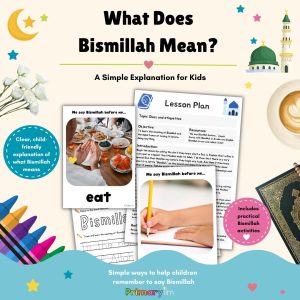
Before eating, encourage your child to say Bismillah. After eating, say Alhamdulillah together.
You can also talk about the food in front of you in a natural way:
“Who made the rain that helped these strawberries grow?”
“Who gave us these apples?”
“Isn’t it amazing that Allah made so many different fruits for us?”
These small conversations help children begin to notice Allah’s blessings in the things they see, taste, and enjoy every day.
2. Teach Tawakkul When You Travel
Whether you are driving to school, visiting family, or setting off on holiday, every journey is a chance to remember Allah.
Before leaving, recite the travelling dua together.
When I was growing up, my mum would always say the travelling dua as soon as we got into the car. It became such a familiar part of our journeys that, even now, I still hear her voice when I recite it.
And now I find myself doing the same with my own toddler.
These little family habits may seem small at the time, but they often become the memories our children carry with them for life.
3. Teach Patience While Waiting
Children spend a lot of time waiting.
Waiting in supermarket queues.
Waiting at appointments.
Waiting for dinner.
Waiting for their turn.
And, understandably, they do not always enjoy it.
But these moments are a lovely way to introduce the idea of sabr – patience.
You might gently say:
“I know waiting is hard. Allah loves those who are patient.”
Your child will not suddenly become patient overnight. None of us do. But hearing that reminder again and again helps them understand that patience is something valuable, something loved by Allah, and something we all keep working on.
4. Teach About Allah Through Nature
Some of the most beautiful Islamic lessons happen outdoors.
On a walk, at the park, or even just looking out of the window, notice the world around you together:
- Birds flying overhead
- Tiny insects on the ground
- Flowers blooming
- Clouds moving across the sky
- Rain falling
Instead of only naming what you see, turn it into a simple conversation.
“Who made the trees?”
“Who taught the birds how to fly?”
“Who sends the rain?”
These little questions help children connect what they see in the world with the One who created it.
5. Teach Responsibility While Tidying Up
Tidying toys is not usually a child’s favourite part of the day.
But even this can become a lesson in responsibility, gratitude, and looking after what Allah has given us.
Instead of simply saying:
“Go and tidy your room.”
You could try:
“Allah has blessed us with these toys, so let’s look after them.”
This does not mean tidying will suddenly become magical and complaint-free. But it helps children understand the reason behind the action. They are not just putting toys away because an adult said so. They are learning to care for their blessings.
6. Teach Generosity Through Sharing
Sharing toys, crayons, snacks, or the last biscuit can be a big deal when you are little.
Everyday moments like these are a chance to help children understand generosity in a deeper way.
Instead of only saying:
“Share because I said so.”
Try saying:
“Allah loves people who are generous.”
This connects their actions back to Allah. It helps them see that kindness is not just about keeping parents happy – it can also be an act of worship
7. Teach Gratitude Before Bed
Bedtime can be one of the most peaceful parts of the day, even if getting there is not always peaceful.
After making dua together, take a minute to reflect.
You could ask:
- What made you smile today?
- What blessing are you thankful for?
- What was something kind you did today?
- Was there anything you found difficult today?
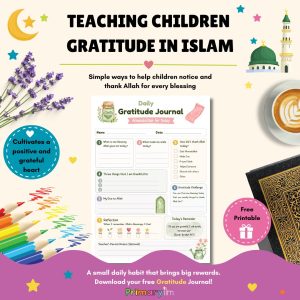
These questions help children get used to noticing Allah’s blessings, thinking about their choices, and ending the day with gratitude.
8. Teach the Importance of Family
Visits to grandparents, cousins, aunties, uncles, and relatives are wonderful opportunities to teach children about maintaining family ties.
Before you visit, explain why it matters.
You might say:
“Allah loves it when we keep good relationships with our family.”
This helps children understand that visiting relatives is not just something we do because it is expected. It is part of living Islam in our everyday lives.
9. Teach That Mistakes Are Part of Growing
Children make mistakes.
So do adults.
One of the most important lessons we can teach our children is that mistakes do not define us. What matters is what we do afterwards.
When something goes wrong, try not to focus only on the mistake. Show your child how we turn back to Allah.
Say Astaghfirullah together.
Talk about forgiveness.
And when needed, let them see you apologise too.
When children watch adults admit mistakes, they learn humility, honesty, and the beautiful truth that we are all still learning.
10. Teach Kindness Through Everyday Acts
Islam is not only practised in the masjid or during formal lessons.
It is practised when we hold the door open.
When we help carry the shopping.
When we smile at a neighbour.
When we comfort someone who is upset.
When your child does something kind, point it out.
You could say:
“That was a beautiful thing to do. Allah rewards kindness.”
Over time, children begin to see that even small acts can be meaningful. They start looking for their own chances to help, give, and care.
Everyday Moments Really Do Matter
Many parents worry that they are not doing enough to teach their children about Islam.
But Islamic learning does not only happen in formal lessons.
It happens in conversations.
In routines.
In habits.
In the little moments we often overlook.
Every Bismillah before eating.
Every dua before a journey.
Every reminder to thank Allah.
Every apology.
Every act of kindness.
These ordinary moments quietly shape a child’s heart.
And over time, they help make Islam feel familiar, warm, and deeply connected to daily life.
Free Everyday Islamic Moments Challenge
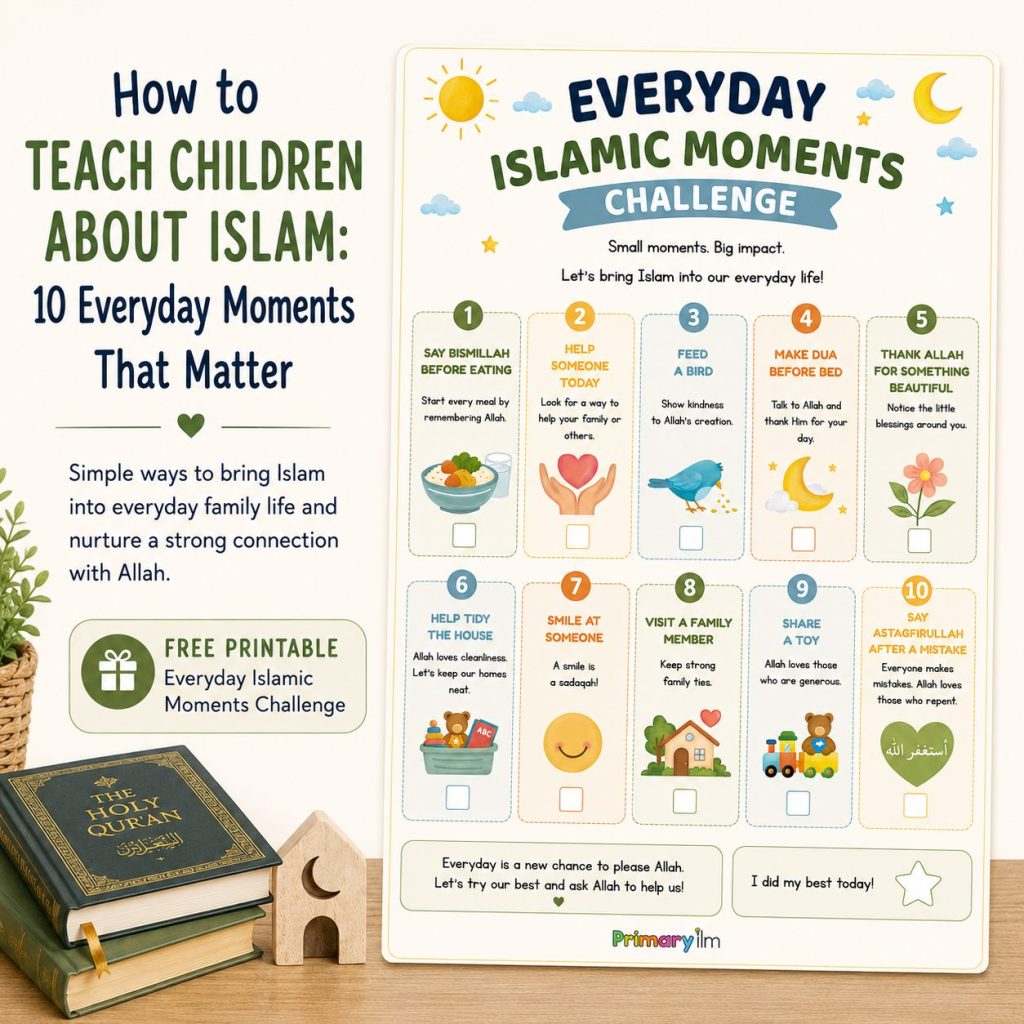
To help your family put these ideas into practice, we have created a free Everyday Islamic Moments Challenge.
It includes ten simple activities that encourage children to remember Allah throughout their daily routines. It is a lovely way to make Islamic learning feel natural, meaningful, and enjoyable.
Download your free printable below and see how many moments your family can complete together this week.

Frequently Asked Questions
How can I teach my child about Islam at home?
You do not need formal lessons every day. Simple routines like saying Bismillah before eating, making dua together, talking about Allah’s creation, and practising kindness all help children develop a strong connection with their faith.
What age should children start learning about Islam?
Children begin learning from what they see and hear from a very young age. Even toddlers benefit from hearing simple duas, seeing parents pray, and experiencing Islam as a natural part of family life.
How do you make Islam enjoyable for children?
Keep it practical, gentle, and meaningful. Use stories, nature walks, family conversations, hands-on activities, and everyday experiences to help children connect Islamic values to their own lives.
What are some easy Islamic activities for children?
Simple ideas include feeding birds, making dua before travelling, helping around the house, visiting grandparents, saying Alhamdulillah for blessings, sharing toys, and completing an Everyday Islamic Moments Challenge.
Do I need to be an Islamic teacher to teach my children?
Not at all. Children learn just as much from what we do as from what we say. By practising Islam consistently in everyday life, parents become their child’s first and most influential teacher.
Final Thoughts
At Primary Ilm, we believe some of the most powerful Islamic lessons are not found in perfect lesson plans. They are found in ordinary family life.
In the way we speak.
The way we show gratitude.
The way we respond to difficult moments.
The way we remember Allah in the small, everyday parts of the day.
Children may not remember every worksheet they completed or every lesson they sat through.
But they will remember how Islam felt in their home.
And if it felt peaceful, joyful, loving, and full of the remembrance of Allah, those memories can stay with them long after childhood.
Continue Your Child’s Islamic Learning Journey
Looking for more Islamic resources?
✓ Browse our growing collection of free resources by creating a free account.
✓ Join our monthly mailing list for free downloads, updates and new resources.
✓ Explore the Primary Ilm Membership for access to 3,000+ Islamic worksheets, activities, presentations and printables.
✓ Follow us on Instagram and Pinterest for ideas and inspiration.