Learning Tajweed can feel overwhelming for children at first, especially when they begin learning new pronunciation rules. One of the earliest and most important rules they will come across is Qalqalah.
In this guide, you’ll learn what Qalqalah means, the five Qalqalah letters, when to apply the rule, simple examples, and the step-by-step method I use to teach children in the classroom.
Whether you’re a parent teaching at home or a teacher introducing Tajweed, this simple approach helps children understand and remember the rule with confidence.
What Are Qalqalah Letters?
Qalqalah is a Tajweed rule that gives certain letters a slight echoing or bouncing sound when they have a sukoon (see below).

or when the reader stops on them at the end of a word.
The word Qalqalah literally means to shake or bounce, which perfectly describes the sound these letters make.
The purpose of Qalqalah is to pronounce the letters clearly without adding a vowel sound.
The Five Qalqalah Letters
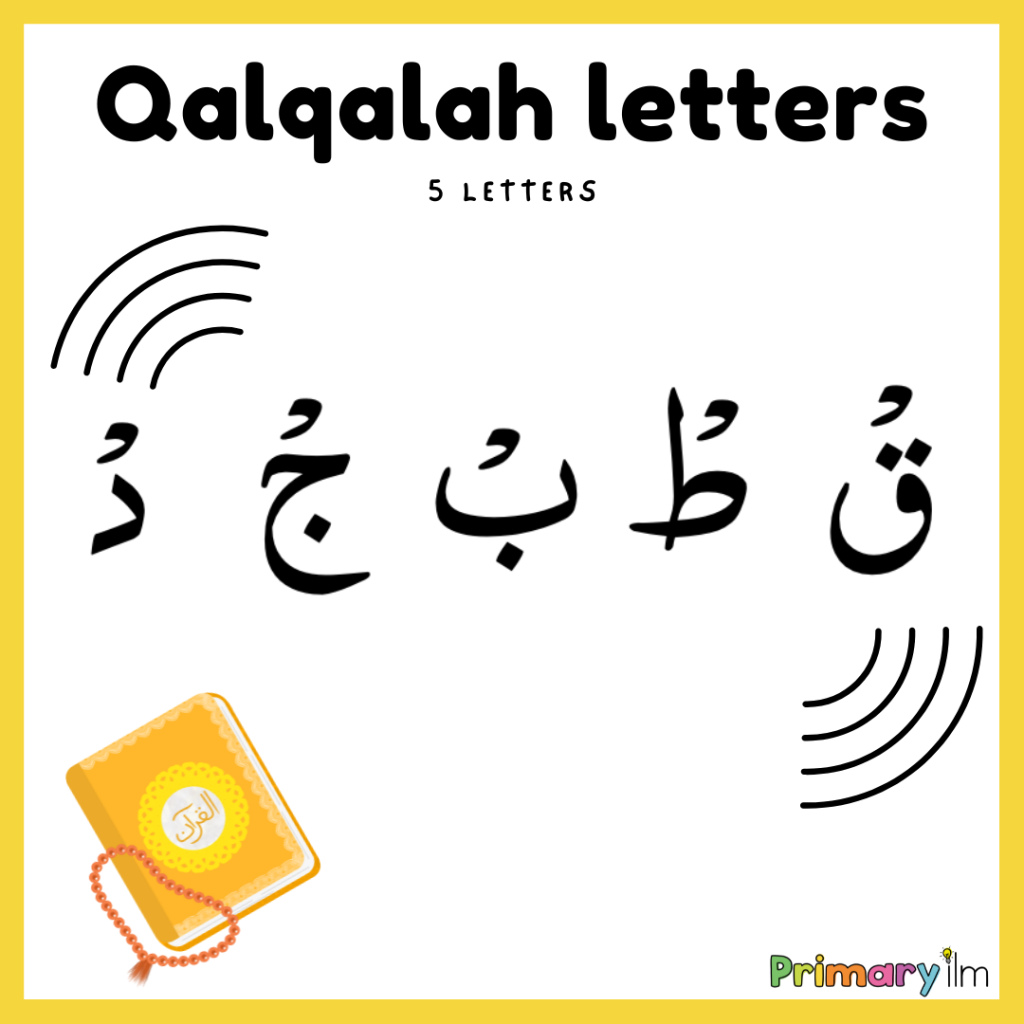
The five Qalqalah letters can be remembered using the phrase:
قُطْبُ جَدٍ
These letters are:
- ق (Qaaf)
- ط (Taa)
- ب (Baa)
- ج (Jeem)
- د (Daal)
Whenever one of these letters has a sukoon or you stop on it while reciting, the Qalqalah rule may apply.
When Do You Use Qalqalah?
Qalqalah is read when one of the five Qalqalah letters is:
- carrying a sukoon, or
- becomes silent because you stop at the end of a word.
For example, if the letter has a fathah, kasrah or dhammah, Qalqalah is not read because the letter already has a vowel sound.
The Two Types of Qalqalah
Qalqalah Sughra (Minor Qalqalah)
Qalqalah Sughra occurs when a Qalqalah letter has a sukoon within a word.
The bounce is light and gentle.
Qalqalah Kubra (Major Qalqalah)
Qalqalah Kubra occurs when you stop on a word ending with one of the Qalqalah letters.
The echo is slightly stronger.
Qalqalah Examples
Here are a few simple examples to practise:
| Word | Qalqalah Letter |
|---|---|
| يَجْعَل | ج |
| أَطْعَمَهُمْ | ط |
| يَبْعَثُ | ب |
| اِقْرَأ | ق |
| أَحَدْ | د |
Encourage children to identify the Qalqalah letter before trying to read the word aloud. This helps them notice the rule rather than simply guessing the pronunciation.
Common Mistakes Children Make
When children first learn Qalqalah, they often make one of these mistakes:
- Making every Qalqalah sound far too strong.
- Applying Qalqalah to non Qalaqalah letters
- Forgetting to apply the rule altogether.
- Adding an extra vowel after the letter instead of producing a short echo. For example reading فَلَقْ as فَلَقَ.
These mistakes are completely normal. With regular practice and gentle reminders, most children become much more confident.
How I Teach Children Qalqalah
Over the years, I’ve found that introducing Qalqalah gradually works much better than trying to teach everything at once.
Step 1: Learn the Letters
When children first reach the relevant page in their Qa’idah, I simply introduce the five Qalqalah letters.
I often call them the “echo letters”, as younger children usually remember this phrase much more easily than the Arabic term.
At this stage, I don’t explain the full rule. I simply want them to become familiar with recognising the letters.
Step 2: Learn the Rule
Once the children know the letters, I explain:
- when Qalqalah is read,
- when it isn’t,
- and why we use it.
For about a week, I ask them to repeat the rule before reading their daily sabaq.
Some children understand it immediately, while others need a little more repetition. Both are completely normal.
Step 3: Find the Qalqalah Letters
Next, we spend a week simply spotting Qalqalah letters throughout a page of the Qa’idah or Qur’an.
Rather than focusing on pronunciation, the goal is recognition.
This builds confidence before asking children to apply the rule while reading.
Step 4: Read with Qalqalah
Once children can quickly identify the letters, we begin practising the pronunciation.
Sometimes this takes a week.
Sometimes it takes two.
Every child learns at a different pace, so there’s no need to rush.
Step 5: Apply the Rule in Their Sabaq
Finally, children begin applying Qalqalah naturally during their daily Qur’an reading.
At first they often need reminders.
Eventually they begin recognising the letters independently and applying the rule automatically.
Whenever a child notices or correctly applies a Qalqalah letter, I always praise their effort. Positive encouragement builds confidence and makes children much more willing to keep trying.
Fun Qalqalah Activities for Kids
Children learn Tajweed best when lessons are interactive.
Here are some activities I’ve found particularly effective:
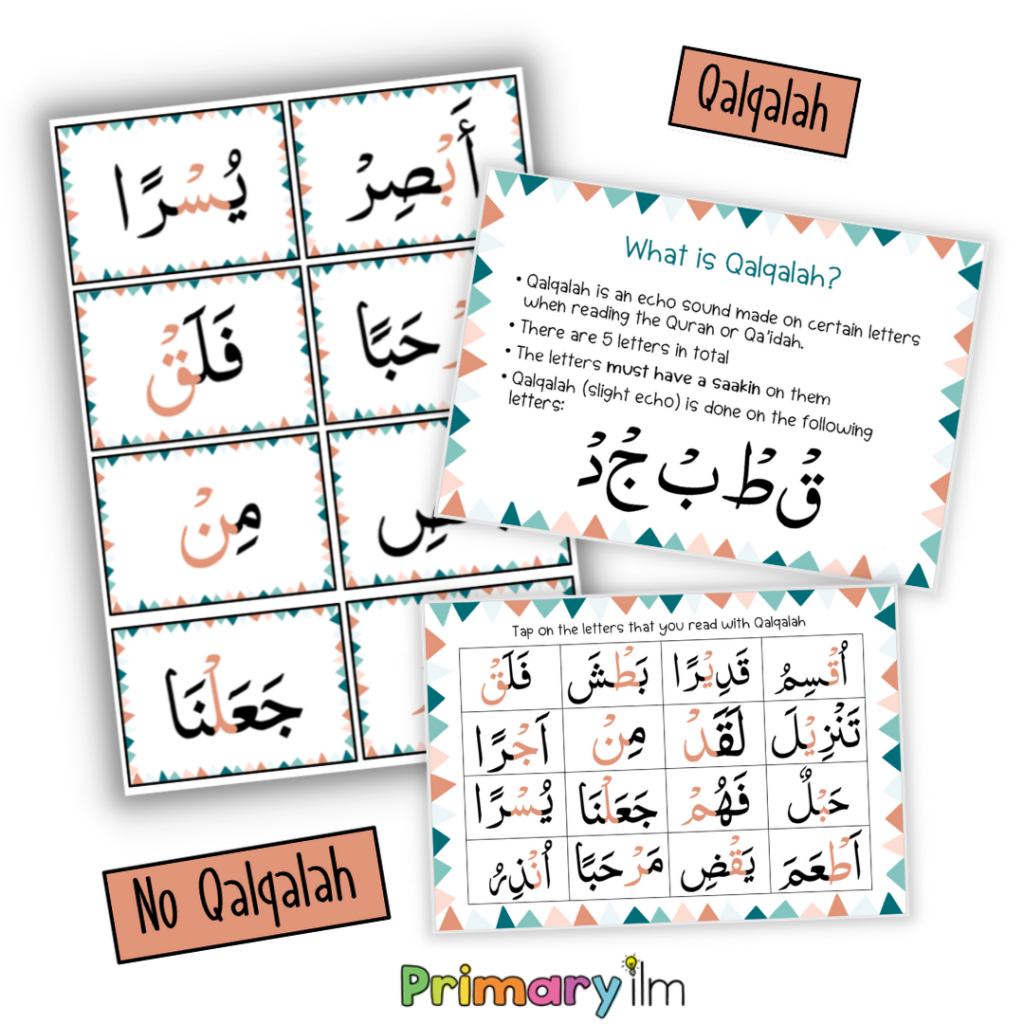
- Sort words into Qalqalah and No Qalqalah.
- Use flashcards to identify the five letters.
- Play partner matching games.
- Hunt for Qalqalah letters on a Qur’an or Qa’idah page.
- Practise reading words together on a whiteboard.
- Use interactive PowerPoint games.
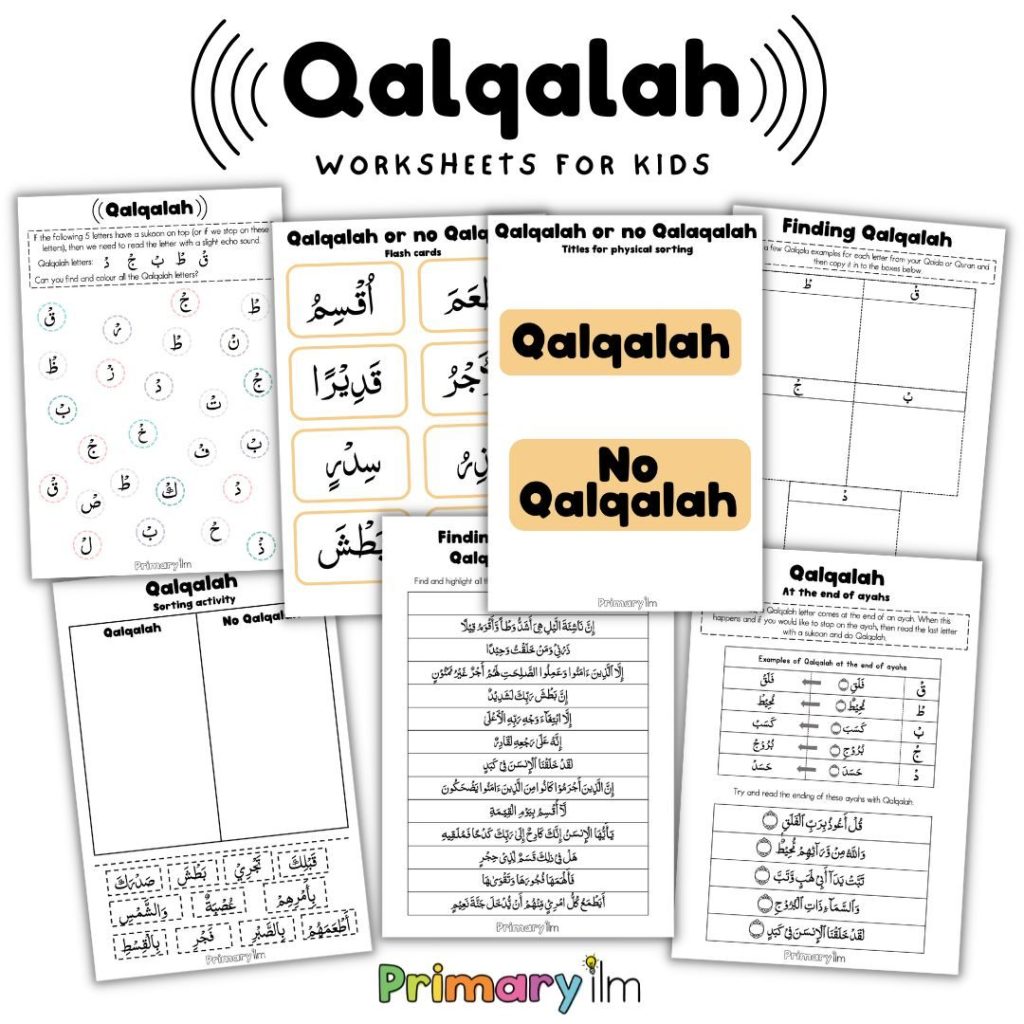
Hands-on activities help children remember the rule far better than simply reading about it.
I’ve created a set of printable Qalqalah flashcards that are perfect for parents, teachers and madrasah classes.
You can:
- hold up each card and ask children whether Qalqalah applies,
- sort the cards into “Qalqalah” and “No Qalqalah”,
- use them as partner activities,
- reinforce the rule through quick revision games.
I keep mine stored in a small Tajweed box so they’re always ready whenever I introduce a new child to the rule.
👉 You can download the flashcards free with a Primary Ilm account.
Interactive Qalqalah PowerPoint Game
I’ve also created an interactive PowerPoint game to help children practise recognising Qalqalah.
The presentation begins by introducing the rule and each of the five letters before moving on to a fun challenge.
Children are shown a grid of words and must click the ones that should be read with Qalqalah.
Correct answers reveal a “Masha’Allah!” screen, while incorrect answers encourage them to try again before returning to the game.
It’s a simple activity that works brilliantly in classrooms, madrasahs or even at home on a tablet.
Frequently Asked Questions
What is Qalqalah?
Qalqalah is a Tajweed rule that creates a slight echoing or bouncing sound when one of five specific letters has a sukoon or when you stop on that letter while reciting the Qur’an.
How many Qalqalah letters are there?
There are five Qalqalah letters:
ق، ط، ب، ج، د
They can be remembered using the phrase قُطْبُ جَدٍ.
What are the five Qalqalah letters?
The five letters are:
- ق (Qaaf)
- ط (Taa)
- ب (Baa)
- ج (Jeem)
- د (Daal)
What is the difference between Qalqalah Sughra and Kubra?
Qalqalah Sughra occurs when a Qalqalah letter has a sukoon within a word.
Qalqalah Kubra occurs when you stop on a word ending with a Qalqalah letter, producing a slightly stronger echo.
Is Qalqalah difficult for children to learn?
Not usually. Most children learn it well when it is introduced gradually. Teaching the letters first, then the rule, followed by recognition activities and finally reading practice, helps children build confidence without feeling overwhelmed.
Teach Qalqalah with Confidence
Teaching Tajweed doesn’t have to be complicated.
By breaking Qalqalah into small, manageable steps and making lessons interactive, children quickly become more confident in recognising and applying the rule during Qur’an recitation.
If you’re looking for ready-made resources, you can explore the free Qalqalah flashcards, interactive PowerPoint game, and many more Tajweed activities by creating a free account at Primary Ilm. If you’d like access to our full collection of printable Islamic resources, worksheets and classroom activities, you can also explore our membership library.
Continue Your Child’s Islamic Learning Journey
Looking for more Islamic resources?
✓ Browse our growing collection of free resources by creating a free account.
✓ Join our monthly mailing list for free downloads, updates and new resources.
✓ Explore the Primary Ilm Membership for access to 3,000+ Islamic worksheets, activities, presentations and printables.
✓ Follow us on Instagram and Pinterest for ideas and inspiration.